Binkhaven
One of the most ambitious, and last remaining rosemaled interiors
Site
Ephraim, WI
Built
1961-1972
Original Artist
Sigmund Aarseth
―
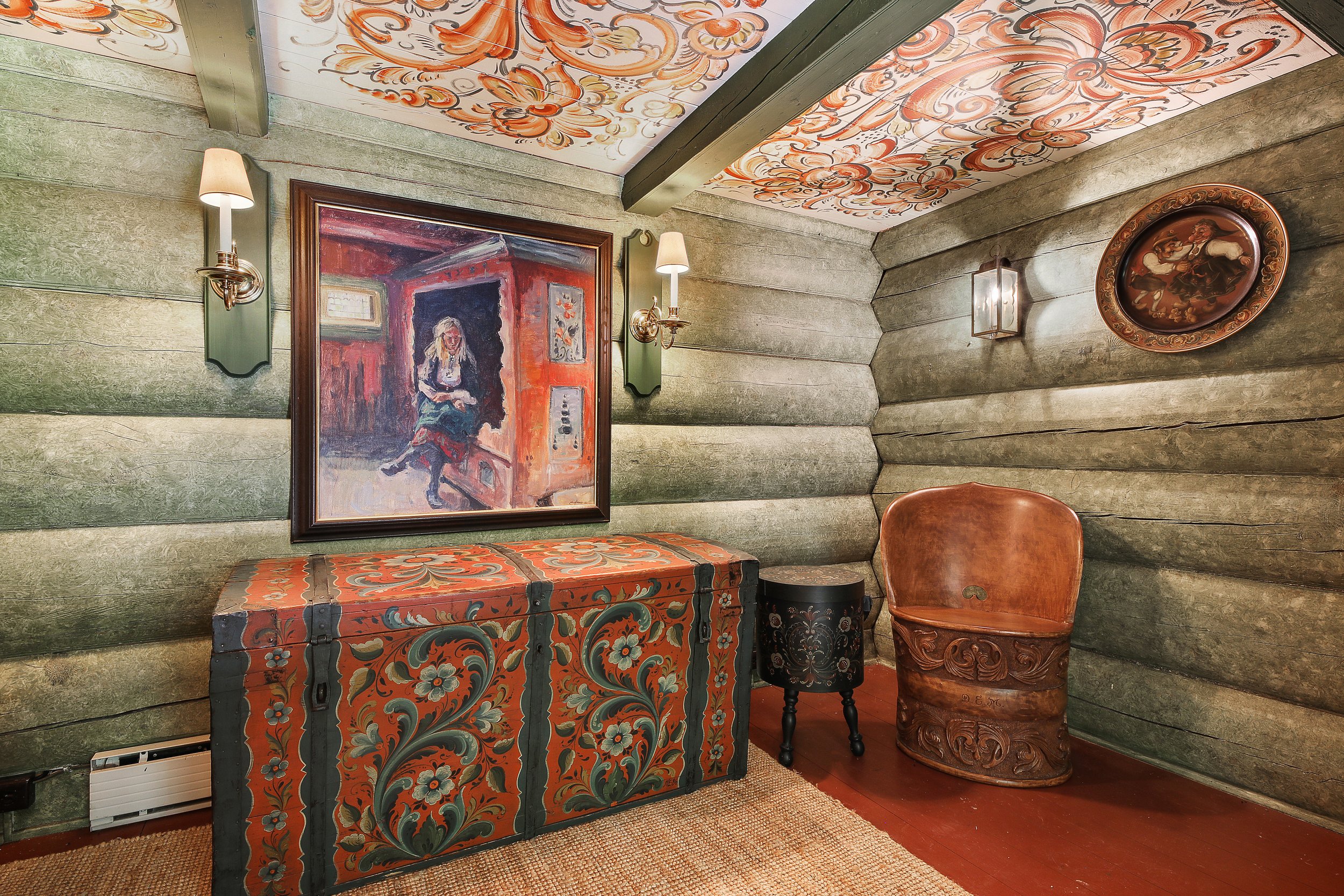
Binkhaven is one of the most complete rosemaled interiors that remains in the Midwest. Rosemaling, Norway’s decorative painting style originating in the baroque era, had a revival starting in Wisconsin in the 1930s. It came to be featured in many midwest interiors but few achieved the status of a total-work-of-art, where every individual object and decorative feature comes together to make one harmoniously rosemaled interior.
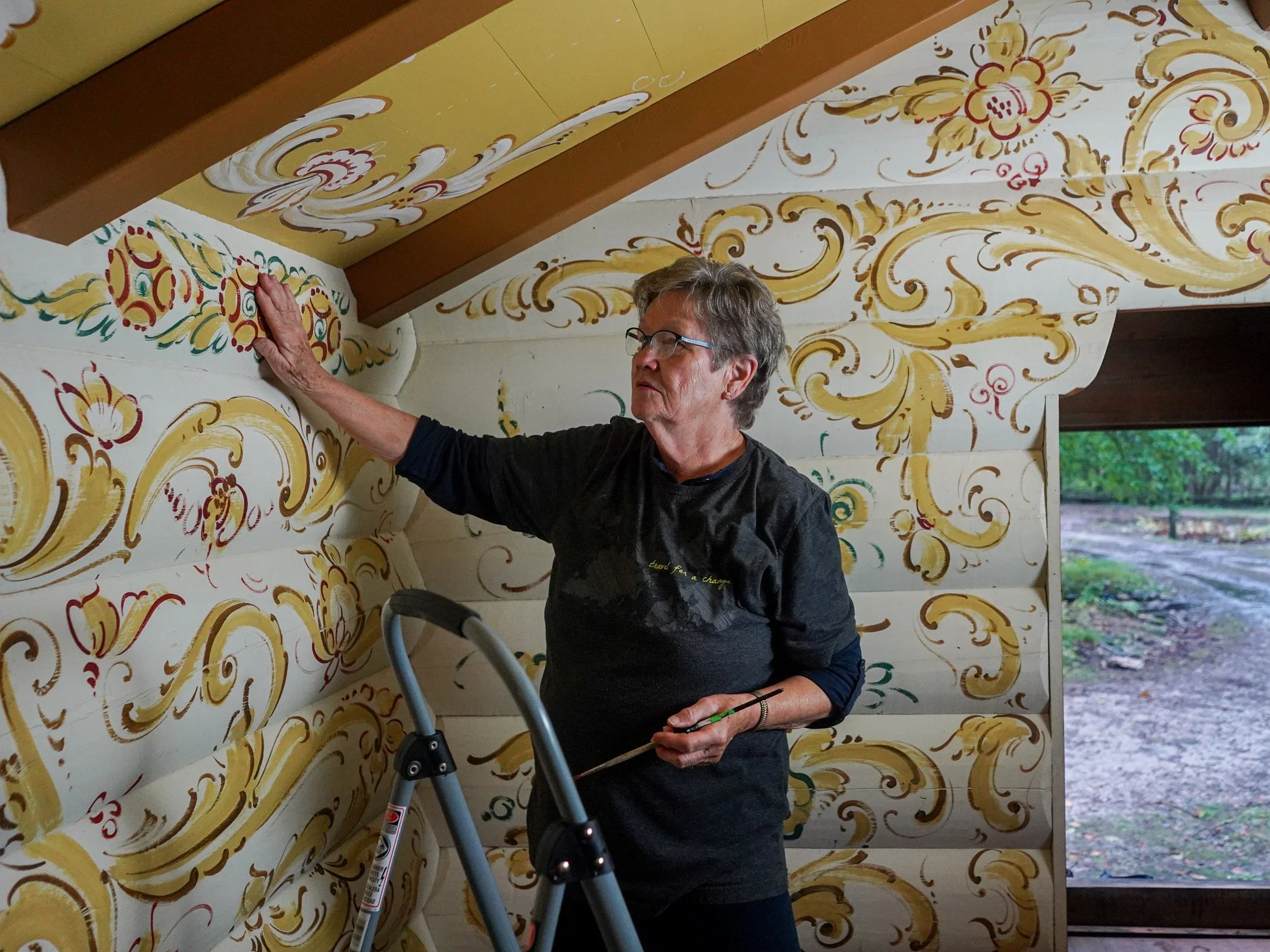
Much of the rosemaling revival is owed to artist Sigmund Aarseth, the first Norwegian to come teach the American painters. He was able to teach them free hand painting and how to use oil paints, which changed the course of American rosemaling because American painters had relied on traced designs and enamel paint which left flat color rather than the rich tonality and movement created with transparent oil paints and smooth wrist movement.
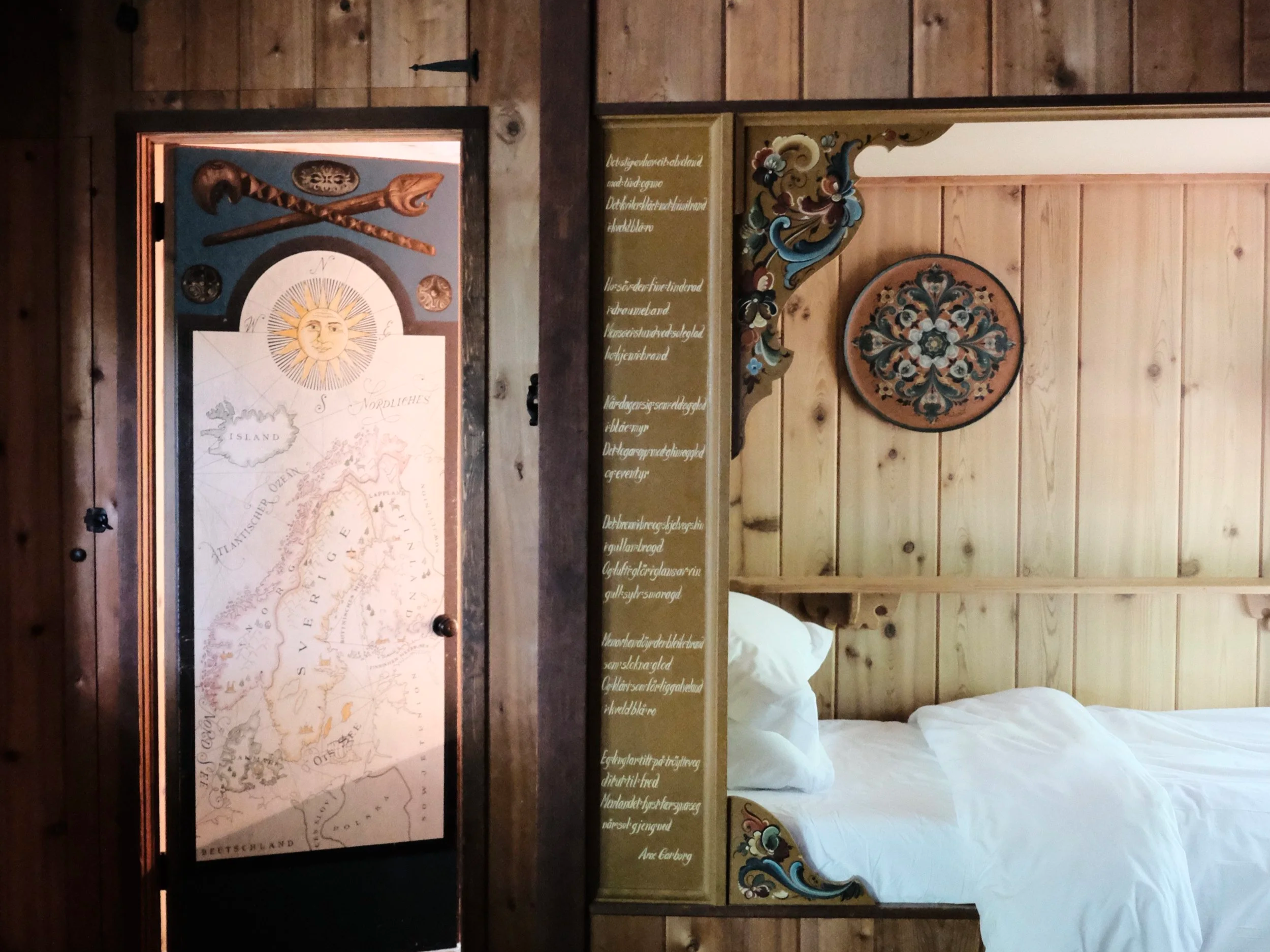
Binkhaven was built by one of the major rosemaling patrons of the 20th century. He hired Sigmund to paint the interiors starting in 1967, it came to be nine ceiling murals and over a dozen pieces of custom made furniture. The rest of the house is filled with rosemaling and art from his most talented students, about 120 mostly women who devoted decades to perfecting the art as if to pick up where the old painters left off. Collected over the course of 50 years, there are now over 600 pieces of rosemaling mostly by American painters and the Norwegians who came to teach them.
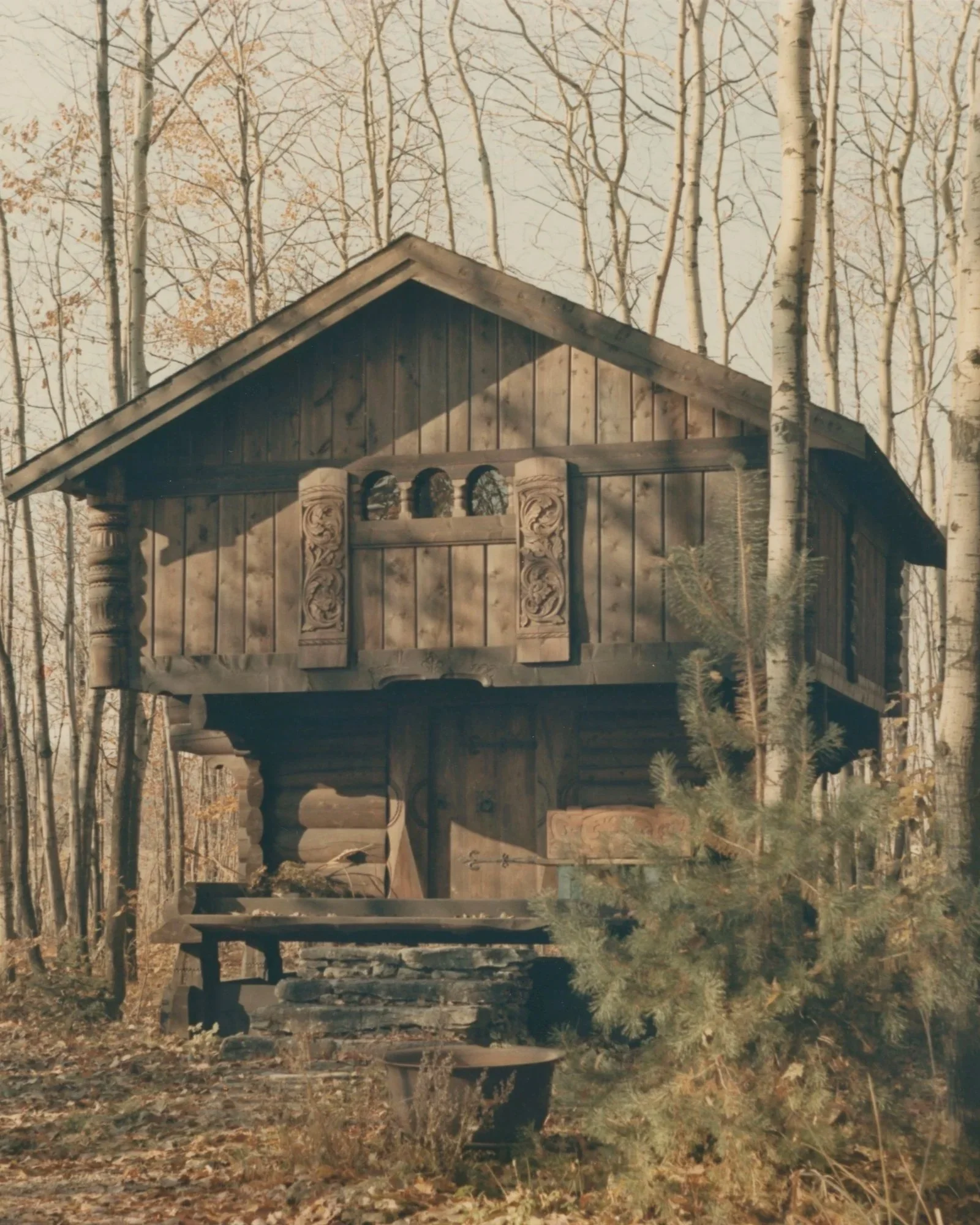
There are four cabins; a main house built in Nordic-revival style that could only have been cooked up at he mid-century, two traditional stabburs (store-houses) shipped from Norway, and a troll house with the workshop and another bedroom - and a mural of 24 trolls each about 4’ tall.
Most original furnishings remain, almost everything hand made and painted. However, while the cabins had always been carefully protected, time had taken its tole. By the time restoration begun, the cabins had been mostly uninhabited for over fifteen years and fell severely behind on maintenance.
Today the interiors are mostly restored. Tours are available on select dates in the summer with the Ephraim Historic Foundation.